How Modern Succession Planning Uses HCM Systems to Reduce Leadership Risk
Testing as a Service (TaaS)
 Priyanka K
March 16, 2026
Priyanka K
March 16, 2026



 Priyanka K
March 16, 2026
Priyanka K
March 16, 2026
When a company’s Head of Operations suddenly resigns or retires, it can leave behind a critical leadership gap. Projects stall, teams lose direction, and the organization scrambles to find a replacement often resorting to expensive external hiring or rushed internal promotions. Situations like these are more common than many organizations expect. This is where succession planning becomes essential.
In today’s fast-moving business environment, organizations can no longer rely solely on past performance or tenure to identify future leaders. Instead, they need structured, data-driven approaches that prepare employees for leadership roles well in advance.
Blog in a nutshell
This blog explores how modern succession planning helps organizations prepare for leadership transitions and reduce business risk. It explains the key steps in the succession planning process, the importance of identifying critical roles and developing internal talent, and how Human Capital Management (HCM) systems enable data-driven decision-making, leadership readiness tracking, and long-term business continuity.
Let us now understand what succession planning is and further learn how modern HCM systems have emerged to build data-driven leadership pipelines supporting long-term business continuity.
Succession planning is the process of selecting and training employees to fill key leadership and critical roles within an organization.
These roles may become vacant due to retirement, resignation, promotion, or unexpected circumstances.
In simpler terms, we can say that a succession planning process ensures that the right people are ready to take on key roles at the right time to maintain leadership stability, operational continuity and maintain cost effectiveness.
Succession planning helps organizations manage leadership transitions smoothly without disrupting business operations. It allows companies to pinpoint potential candidates from existing resources, who may be willing to take up the vacant roles. This prepares them for effective knowledge transfer without additional costs for hiring from outside.
However, succession planning is not just an HR exercise. It has become a core component of enterprise risk management. The success of a business would depend on its organizational structure and leadership pipeline.
For HR, HCM architects, and business strategists, corporate succession planning requires a systematic, data-driven framework that identifies critical roles, develops leadership talent, and reduces organizational risk.
Successful succession planning goes beyond identifying talent; it focuses on developing leaders who can guide teams, adapt to change, and drive long-term organizational growth.
Effective succession planning hinges not just on identifying talent but developing leaders who can inspire teams and navigate change.
Explore
why Emotional Intelligence is a key ingredient in leadership effectiveness.
Succession planning in human resource management helps in building long-term stability in an organization, especially when aligned with business goals. It helps in the following ways:
An effective succession planning process identifies leadership needs early and prepares potential successors well before roles become vacant. This process includes the following steps:
Maximize your succession process with smart tech tools that automate talent tracking, performance insights, and predictive readiness. See how HR technology is reshaping HR processes and empowering teams .
Succession planning acts as the connecting bridge between workforce management and risk management. The goal is to ensure that no single departure would upset the existing operational structure or strategy. The idea is to be prepared for exits, resignations or retirements by proactively identifying critical roles and equipping future leaders.
For Example:
If the Head of Operations plans to retire in 18 months, HR and leadership should already have identified one or more internal employees with potential to fill up the role. Furthermore, those individuals might undergo leadership training, handle interim assignments, or be mentored directly. Hence, during the time of transition, there’s a smooth handover and business continuity remains intact.
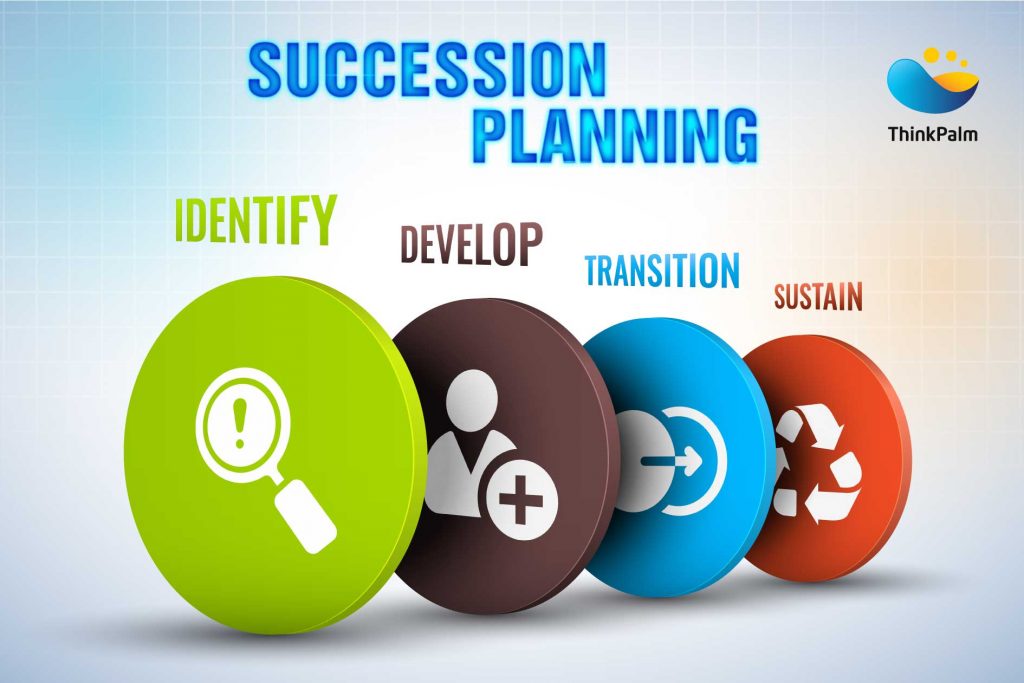
Succession Planning Framework Processes
A strong succession planning framework follows a clear process:
Succession Planning in HR is a strategic imperative as it helps to avoid leadership gaps. The critical roles are identified, and adequate training is provided to employees who are willing to take up the role. This avoids the last moment’s rush in filling up the gaps.
Succession Planning Framework Flow
Business Strategy
↓
Critical Role Identification
↓
Successor Assessment & Readiness Mapping
↓
Targeted Development & Learning
↓
Leadership Transition & Monitoring
An effective succession planning must clearly align with the enterprise goals. The company may have plans to expand into new markets, adopt digital technologies, or even go through mergers. This requires new skills, updation of trends, or revised leadership capabilities. Therefore, the right people need to be chosen for the right roles, and the succession plan should entail all these features.
Alignment chain:
Business Strategy → Workforce Capabilities → Critical Roles → Successors → Development Pathways
Embedding this linkage ensures that talent discussions support measurable business outcomes.
Succession planning need not correlate with all roles but focus only on important roles that can seriously disrupt business operations, revenue, compliance or leadership continuity.
Criteria for Evaluating Critical Roles to Enable Corporate Succession Planning
| Factor | Description |
| Business Impact | Direct influence on revenue, operations, or compliance |
| Knowledge Uniqueness | Specialized or institutional know-how |
| Leadership Span | Breadth of people or functions led |
| External Exposure | Customer, regulatory, or investor interface |
| Replacement Difficulty | Effort and time to fill the role externally |
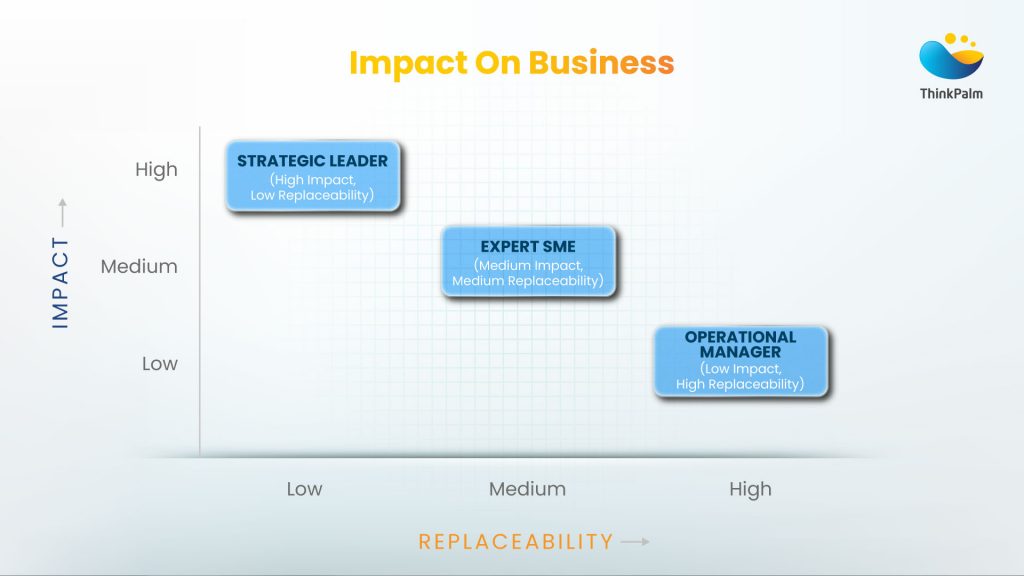
Role Criticality Matrix
An effective talent management and succession planning is not just about finding one replacement. In fact, it’s about building a talent pipeline for future leaders. They need to assess their readiness to take up the role.
It is quite natural that not everyone is ready to step into a critical role immediately. Their readiness to handle responsibilities can be divided into 3 layers such as who is ready now, who will be ready soon, and who can be developed for the future.
| Readiness Tier | Time Horizon | Development Focus |
| Ready Now | Immediate | Transition planning |
| Ready Soon | 1–2 years | Accelerated leadership programs |
| Ready Later | 3–5 years | Long-term learning and mentoring |
Effective succession planning relies on well-defined objectives and data-driven decisions. Organizations should assess employee performance and leadership potential using standardized metrics as part of a strong HR succession planning approach.
Individual development plans must be aligned with business-critical roles to ensure the succession planning strategy supports long-term business continuity and leadership readiness.
Using centralized HCM dashboards and modern succession planning tool kits provide visibility into successor readiness, strengthen leadership succession planning, and helps measure the success of the overall succession plan. Moreover, when it is supported by HCM testing practices, organizations can rely on data-driven insights and make decisions that secure the future of companies.
See how ThinkPalm enabled 50% faster payroll implementation using AI-driven automation in this real-world HCM transformation case study.
As we know, critical roles in an organization require advanced skills, expertise, and experience. When these roles remain vacant, it creates a void within the organization due to valuable knowledge loss as well as resource loss.
A succession planning guide helps to fill up these gaps as it functions as a risk management mechanism, not just an HR process. Leadership vacancies create measurable people at risk that can disrupt operations and strategy. By integrating succession planning data into enterprise risk registers, senior leaders can gain visibility into potential leadership gaps.
Leadership vacancies represent a measurable organizational risk. When critical roles remain unfilled, companies may experience operational disruption, knowledge loss, and reduced decision-making efficiency.
Succession planning helps organizations mitigate these risks by integrating leadership pipeline data into enterprise risk management frameworks.
There are certain metrics used to measure the risks a vacancy can bring in.
Risk Management Integration Map
[Enterprise Risk Register]
↑
[People Risk Dashboard] ←→ [Succession Planning Module]
↑
[HCM Core Data] ←→ [Learning & Development System]
When all these metrics are taken into consideration, companies can prepare for handling risks, talent management and succession planning.
Modern Human Capital Management systems enable organizations to manage succession planning at scale. By aligning with business strategies, leadership readiness and talent management, succession planning can be made more proactive and data driven.
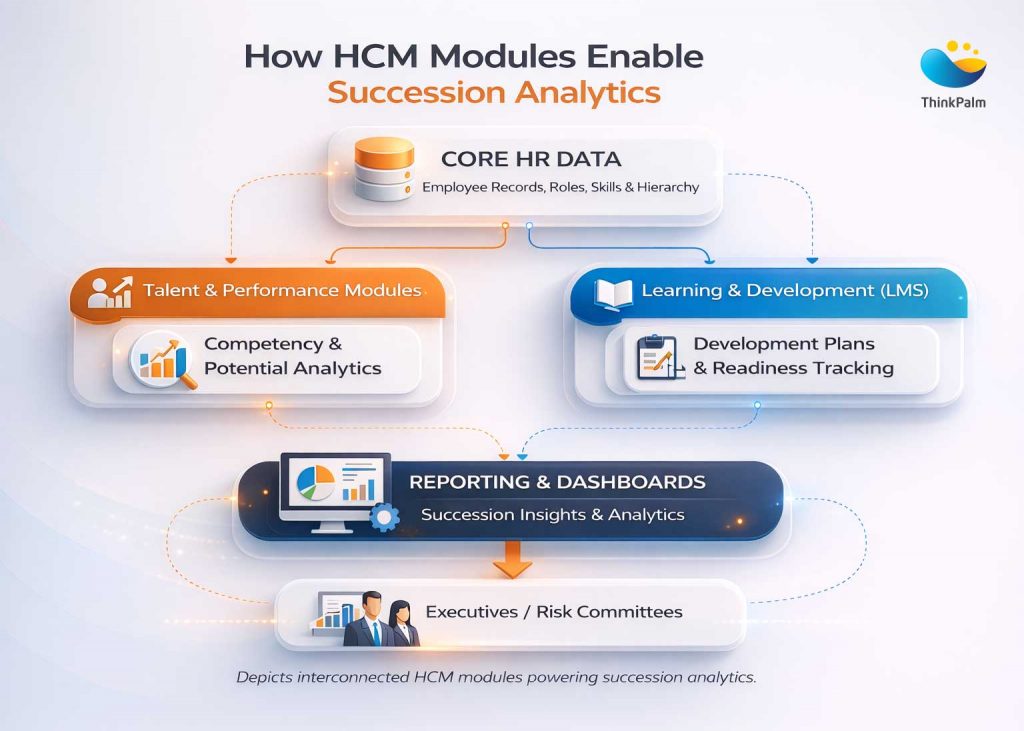
HCM Succession Architecture Overview
Listed below are some steps in business succession planning helping enterprises utilize modern HCM platforms for automating the entire lifecycle:
Continuous improvement of HCM systems and quality assurance drives succession effectiveness. Learn how robust testing frameworks make these HCM platforms more reliable and scalable in our blog on How HCM Testing Transforms Workforce Management .
A good governance framework will decide how well a succession plan can happen. It clearly defines who is to identify the people who can take up leadership roles. The Governance structure includes:
Clear governance improves accountability and ensures succession planning remains aligned with business priorities.
Succession Planning should not be limited to a mere HR exercise. In fact, it is a process that can be embedded into the HR workflows to foster a culture of continuous leadership development.
Organizations that encourage mentorship, leadership development programs, and internal mobility create a sustainable leadership pipeline. In this way, the company can nurture internal talents within their own internal resources. This calls for greater accountability within the organization ensuring a steady and sustainable pipeline of future leaders.
Succession planning provides an opportunity for companies to find adequate replacements for departing leaders. Unplanned exits may create bottlenecks within an organization. If planned well using HCM strategies and succession planning steps, it can create a smooth leadership transition. Instead of reacting to exits, succession planning framework gives scope for companies to attain greater stability and smooth knowledge transition even during leadership transitions.
With the help of rigorously tested HRIS and talent intelligence systems, succession planning can be further strengthened so that leadership pipelines are data-driven, and future-ready. At ThinkPalm, we bring deep expertise in HCM and HRIS testing to help organizations build resilient, AI-driven, and compliant succession planning capabilities that protect business continuity and leadership readiness.
Ultimately, effective succession planning strategies make companies further equipped by combining critical role identification, risk-based thinking, and technology-enabled insights to create a resilient leadership framework. This ensures that knowledge, capability, and decision-making strength remain intact over time, allowing the enterprise to thrive regardless of individual leadership changes.
Succession planning is a strategic, data-driven process that identifies critical roles and prepares internal talent to ensure leadership continuity, reduce business risk, and maintain operational stability using HCM systems, readiness mapping, and development pipelines.
HCM systems support succession planning by providing centralized talent data, competency frameworks, AI-driven analytics, readiness mapping, and learning integrations. These tools enable data-driven decisions and improve visibility into leadership pipelines.
The benefits of succession planning include maintaining stability during change, reducing leadership risk and protecting institutional knowledge.
AI enhances succession planning by identifying high-potential talent, predicting attrition risks, analyzing skill gaps, and supporting scenario modeling for leadership transitions. This makes the process more proactive and scalable.
Succession Planning using HCM systems helps in automating the entire process across the organization. By aligning with business strategies, leadership readiness and talent management, succession planning can be made more proactive and data driven.
Priyanka K is a Software Test Engineer at ThinkPalm Technologies, specializing in test automation for enterprise and workflow-driven applications. Beyond ensuring complex systems run smoothly, she is a tech enthusiast who loves exploring new tools and frameworks. A curious mind at heart, she enjoys reading, long walks and discovering small joys in everyday life.